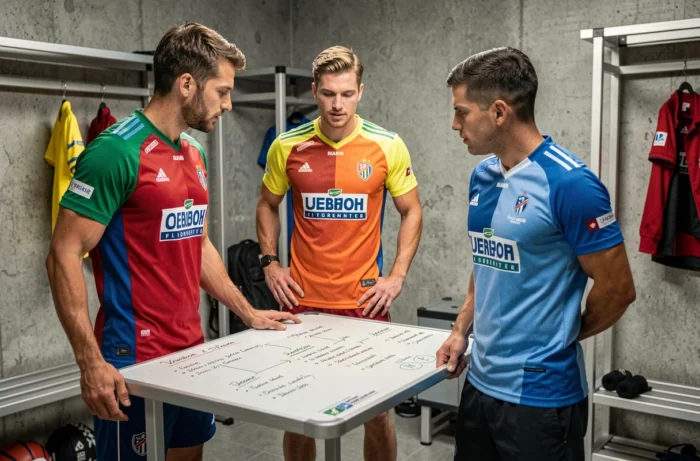
Sports news is not just about scores and transfers. Behind every competition, legislative reforms, economic constraints, and access issues are reshaping the landscape of sports in France. Understanding these mechanisms allows for a more comprehensive reading of sports news.
Reform of Professional Football: What the Law Changes for Clubs and TV Rights
The law adopted in 2026 provides for the replacement of the Professional Football League with a commercial company owned by the clubs, with a deadline for implementation set for February 3, 2027. This change in legal structure goes beyond a simple organizational chart: it directly affects the commercialization of broadcasting rights and the mechanisms of solidarity between professional and amateur football.
In practical terms, clubs become shareholders of a commercial entity that negotiates TV rights on their behalf. The central question remains redistribution: what share will go to lower divisions and amateur sports? The reform opens a project that intertwines corporate law, sports regulation, and public policy.
Meanwhile, for those who follow these developments daily, sports news on TicTac Sport provides analyses and results across all disciplines.
Stronger Control of Investors
The relevant authorities, including the DNCG in football, must now examine the financial history of investors over five years, their stakes in other clubs, and the risks associated with multiple ownership. Sanctions can lead to exclusion from competitions in case of rule violations.
This system aims to prevent opaque financial arrangements that weaken clubs in the long term. For supporters, this has become an institutional issue: the law recognizes their place in governance.
Piracy of Sports Broadcasts: The Legal Framework Tightens
The August 2026 law on sports piracy introduces a new operational mechanism. Rights holders can send data identifying services illegally broadcasting a competition to Arcom, to facilitate their blocking during the broadcast itself.
Before this law, blocking often occurred after the broadcast, making it less deterrent. The new system allows for real-time reactions while the match or race is ongoing. For legal broadcasters (pay channels, streaming platforms), this is a direct protective lever for the value of their contracts.
This development affects all disciplines: football, rugby, cycling, Formula 1. Every competition whose rights are marketed potentially benefits from this mechanism. Live piracy becomes legally actionable in real-time.
Access to Sports Practice: The Cost of Registrations vs. Public Aid
Major sporting events (Olympic Games, World Cups, Cycling Tours) regularly generate a spike in registrations in amateur clubs. The effect is documented after each major edition. The question that arises next is the duration of this enthusiasm and the means to sustain it.
The return to amateur sports is accompanied by a less favorable budgetary arbitration for beneficiaries. Local authorities, the main funders of facilities and subsidies to clubs, face increasing constraints. The cost of a license, equipment, and travel weighs on families, especially in disciplines where equipment is expensive (cycling, sliding sports, equestrianism).
What Specifically Hinders Access to Sports
- The price of licenses and annual fees, which varies greatly by federation and region, without a harmonized national scale
- The cost of mandatory equipment, sometimes not covered by existing aid (protective gear in rugby, bike in road cycling)
- The availability of slots in public facilities, often saturated in densely populated urban areas
- The evolution of local public aid, which depends on municipal and departmental decisions from one year to the next
A major sporting event is not enough to democratize practice if the material conditions for access do not follow. The issue lies less in media coverage than in the structural funding of local clubs.
Autumn 2026 Sports Calendar: Key Events Shaping the News
Autumn 2026 concentrates several major competitions that feed the sports news stream. Each of these deadlines produces repercussions beyond the field: transfers, audiences, debates on athlete safety.
- The Tour of Lombardy, the last Monument of the cycling season, saw riders publicly protest for their safety during this edition.
- Ligue 1 begins its sixth matchday with fixtures like Lens-Lyon, in the context of a structural reform of French professional football.
- The Judo World Championships in Baku, where Issoufi won a silver medal for the French team.
- The Formula 1 Grand Prix in Singapore saw Max Verstappen win the sprint, maintaining the tension in the championship.
These events are not isolated from one another. The reform of TV rights influences the visibility of Ligue 1. The fight against piracy conditions the revenues of broadcasters. And international results in judo or cycling fuel the debate on the resources allocated to federations.
French sports is going through a period where regulatory decisions weigh as much as performances. Following sports news today requires understanding both the field and the institutional backstage, where funding, governance, and access to sports for the greatest number are at stake.