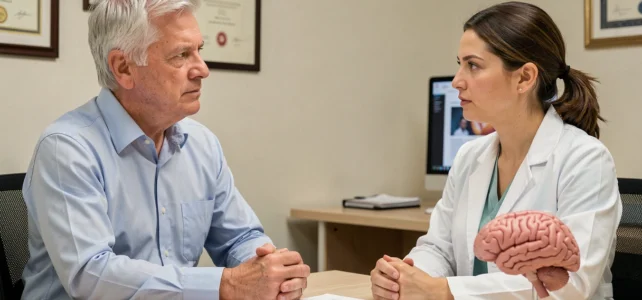
The resumption of driving after a stroke does not depend on the diagnosis itself, but on the residual effects. Driving after a stroke involves several medical and administrative steps, the timelines and requirements of which vary according to the severity of the impairment. What criteria truly determine fitness to drive, and when can one expect to regain their license?
Timelines for Resuming Driving Post-Stroke According to Severity
The waiting time before resuming driving depends directly on the severity of the stroke and whether rehabilitation is necessary. The table below summarizes the minimum applicable timelines in France.
| Type of Stroke | Minimum Waiting Period Before Resumption | Prerequisite Condition |
|---|---|---|
| Minor Stroke (without rehabilitation) | Minimum 15 days | Identification of disorders + consultation with an approved prefecture doctor |
| Moderate to Severe Stroke (with rehabilitation) | Minimum 1 month | Multidisciplinary assessment of driving capabilities |
| Stroke with Persistent Sequelae | Variable, sometimes several months | Administrative declaration + official fitness check |
These timelines represent a minimum. In practice, the actual duration before resuming driving is often longer, as it depends on individual functional recovery.
The question of driving licenses after a stroke arises as early as the rehabilitation phase, and healthcare professionals generally guide the patient towards the appropriate evaluation process.
Residual Sequelae and Fitness to Drive
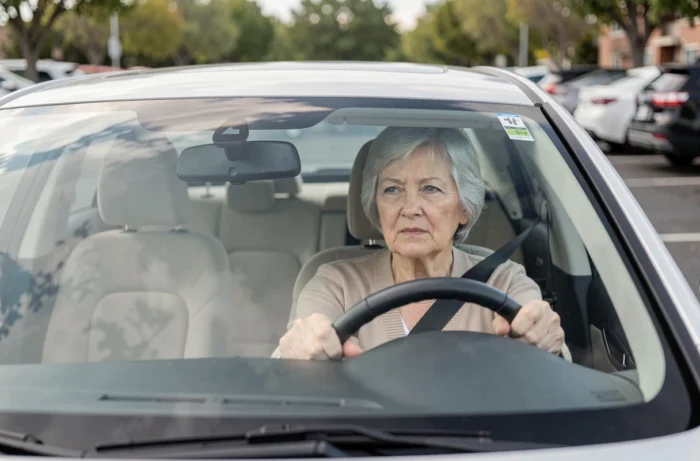
The determining factor is not the stroke itself, but the persistence of disorders affecting driving. The decree of August 31, 2010, mentions a temporary incompatibility whose duration depends on the nature of the observed deficit.
The assessed capabilities cover a broader spectrum than many patients anticipate. They are not limited to motor skills.
- Motor and sensory abilities: weakness in a limb, loss of sensation in the hand or foot, difficulty turning the steering wheel or operating the pedals
- Visual abilities: reduced field of vision (hemianopsia), double vision, difficulty judging distances
- Cognitive and behavioral abilities: slowed reaction time, inattention, difficulty managing multiple tasks simultaneously
- Memory and spatial orientation: visuo-spatial disorders affecting reading traffic signs or navigating in traffic
A patient who has recovered motor function may still be unfit if their cognitive functions remain impaired. Conversely, residual muscle weakness does not necessarily prevent resumption if vehicle adaptations compensate for it.
Cognitive Disorders: The Underestimated Criterion
Attention and reaction time disorders are the most common reasons for refusal during evaluations. A driver may feel ready to resume driving while exhibiting an attentional deficit incompatible with road safety.
These cognitive functions are not always perceptible in daily life. They may only become apparent in complex driving situations: merging onto the highway, navigating a busy roundabout, driving at night.
Multidisciplinary Assessment of Driving Capabilities Post-Stroke
The assessment is not limited to a consultation with the primary care physician or neurologist. It involves multiple professionals and may include a road test or simulator.
For a minor stroke, the process begins with identifying visual, sensory, motor, and cognitive disorders with a healthcare professional. Consultation with a prefecture-approved doctor remains mandatory in all cases.
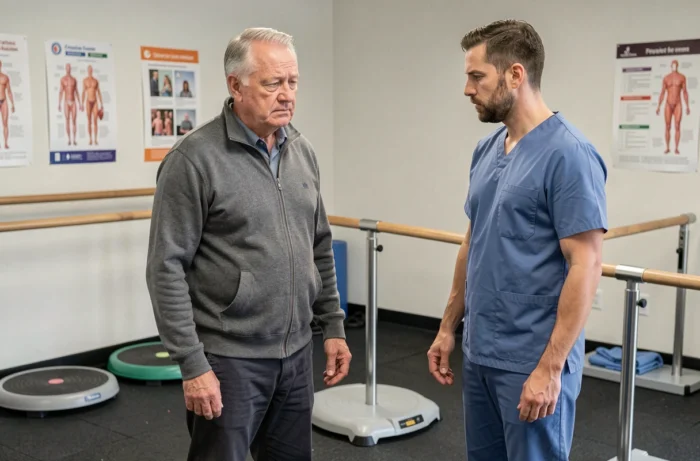
For a moderate to severe stroke, the evaluation is more comprehensive. It can be prescribed by a physician (primary care, neurologist, rehabilitation doctor, occupational physician) or requested directly by the patient. This multidisciplinary assessment tests attention, vision, memory, and visuo-spatial abilities under conditions close to real driving.
Procedure for Prefectural Medical Control
The prefecture-approved doctor provides an opinion that leads to three possible outcomes.
- Unrestricted fitness: the license is maintained or restored, sometimes with a limited validity period requiring periodic checks
- Fitness with restrictions: driving allowed under conditions (vehicle adaptations, geographical limitations, prohibition of night driving)
- Temporary or permanent unfitness: the license is suspended until a new evaluation, or revoked if the sequelae are deemed incompatible with driving
A temporary unfitness opinion is not final. The patient can request a re-evaluation after a period of additional rehabilitation.
Vehicle Adaptation and Restricted Validity License
When motor sequelae persist without compromising cognitive functions, vehicle adaptation often allows for maintaining fitness to drive. The most common adaptations concern steering controls, left-foot accelerator, or assisted braking.
These adaptations must be noted on the driving license in the form of restrictive codes. The adapted vehicle must be homologated, and the driver can only use a vehicle that complies with the recorded restrictions.
Funding for these adaptations may be partially covered. The website monparcourshandicap.gouv.fr details the programs available to people with disabilities for driving licenses and vehicle adaptations.
The validity of the license is often limited in time after a stroke with sequelae. An annual or biennial check may be imposed by the approved doctor, requiring the driver to regularly demonstrate that their abilities remain compatible with driving.
Resuming driving after a stroke follows a structured path where each step, from waiting periods to functional evaluations, aims to objectively measure fitness. The stroke diagnosis triggers the process, but it is the residual sequelae, and their evolution over time, that determine the outcome.