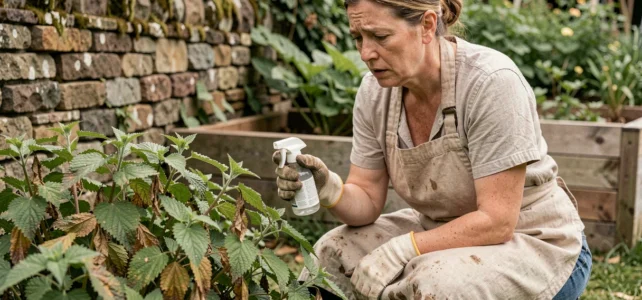
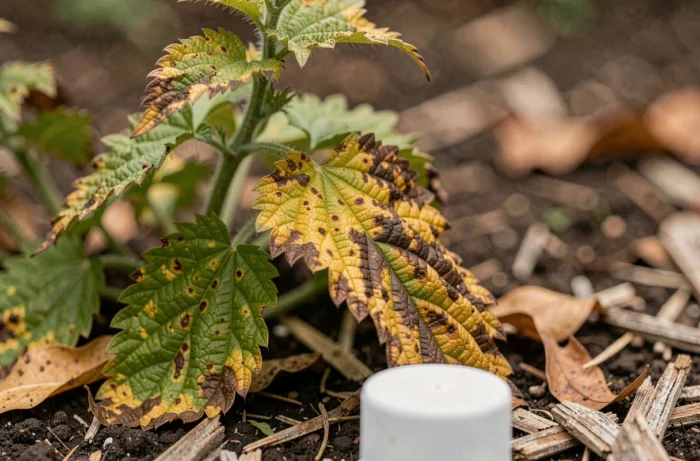
Pouring bleach on nettles to get rid of them is a common reflex. The visible result is quick: the leaves turn yellow, blacken, and then wilt within a few hours. The problem is that this action triggers a series of much more lasting damages underground than the regrowth of the nettles themselves.
What bleach really does to your garden soil
Sodium hypochlorite, the active compound in bleach, is a powerful biocide. It does not only target nettles. It oxidizes everything it touches, including the microscopic organisms that keep your soil alive.
Have you ever noticed that soil regularly treated with bleach becomes compact and crusty on the surface? This is a direct consequence of the destruction of bacteria, fungi, and micro-algae that naturally aerate the soil. Without them, the soil retains less water and nutrients.
Bleach residues migrate to the root zone of neighboring plants, even after watering. The idea that simple dilution makes the product harmless is false. The roots of your vegetables, shrubs, or flowers absorb these residues, which can cause yellowing of the leaves and a gradual weakening of the plant. As detailed in Le Jardineur’s article on nettles, this combination proves toxic to the entire garden ecosystem.
Over time, the soil becomes permanently impoverished. Treated areas paradoxically become more favorable to resistant weeds, as biological competition has disappeared. A sterilized soil promotes the rapid return of the toughest weeds, including nettles.
Toxic gases: the danger of mixing bleach and acidic products in the garden
In the vegetable garden or pathways, bleach is sometimes combined with white vinegar or other acidic solutions in the belief that it enhances the weeding effect. This practice causes a chemical reaction that releases chlorine gas.
The release of chlorinated gas is a real poisoning risk, not just a minor inconvenience. Symptoms range from respiratory irritation to serious pulmonary difficulties. Health authorities classify these mixtures among the common causes of domestic poisoning.
The problem is not limited to human health. These gases settle on the leaves and fruits of nearby crops, making them unfit for consumption. In a vegetable garden, the entire harvest can be compromised.
What never to mix with bleach in the garden
- White vinegar, even when very diluted: the reaction produces chlorine gas regardless of concentration
- Ammonia or liquid nitrogen fertilizers: the mixture generates chloramines, compounds that irritate the lungs and mucous membranes
- Concentrated baking soda solution: although less dangerous, it neutralizes the effect of bleach and produces salt residues that accumulate in the soil
Damage to garden materials and surfaces
Bleach does not only attack living things. On porous surfaces like tiles, natural stone slabs, or wood borders, bleach increases porosity and weakens the material’s structure. Terrace joints disintegrate, wood whitens and then cracks.
At first glance, the surface appears clean. In reality, the increased porosity allows moisture to penetrate more deeply, accelerating the proliferation of mosses and lichens in the following weeks. The final result is worse than the starting point.
Natural alternatives to eliminate nettles without destroying the soil
If nettles are invading your growing areas or pathways, several methods allow you to control them without compromising soil life.
Hand weeding remains the most effective method for small areas. Pull up the nettles after rain, when the soil is loose: the roots come out more easily. Wear thick gloves to avoid stings.
For larger areas, mulching provides a durable physical barrier. A thick enough layer of straw, wood chips, or cardboard prevents light from reaching the nettle seedlings and limits their germination.
- Pure white vinegar (used alone, never with bleach) burns the leaves on contact, but its effect remains superficial and does not destroy the roots. It is suitable for weeds between slabs
- Boiling water poured directly on the nettles destroys the tissues without leaving chemical residues in the soil
- Diluted black soap, applied to the leaves, disrupts the plant’s respiration and repels aphids that often colonize nettles at the edge of the vegetable garden
Turning nettles into allies for the vegetable garden
Before trying to eliminate them at all costs, remember that nettles are also a resource. Their leaves, rich in nitrogen, can be transformed into nettle manure, a natural fertilizer and an effective repellent against aphids.
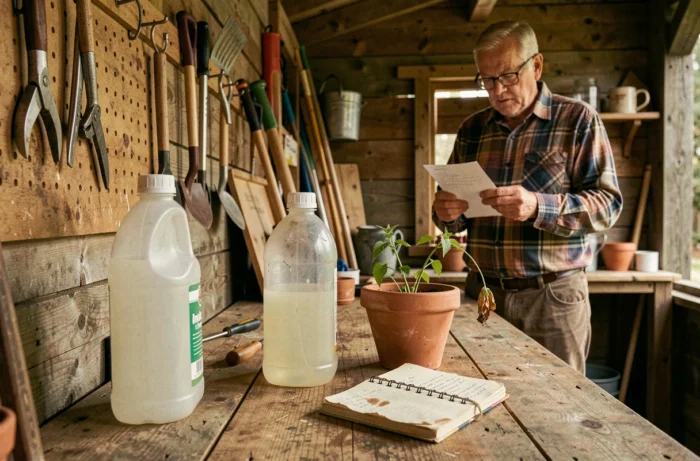
A simple recipe: let the leaves soak in water for one to two weeks, strain, then dilute before watering your tomato plants or fruits. The manure nourishes the soil instead of destroying it.
Nettles also serve as an indicator of soil quality. Their presence signals a nitrogen-rich and well-drained terrain, which is rather good news for a vegetable garden.
The bleach reflex against nettles comes from a simple logic: quickly destroy what is bothersome. The reality on the ground shows that this approach costs the garden more than it brings. A living soil, maintained with mechanical and biological practices, regulates weed pressure itself in the long term.