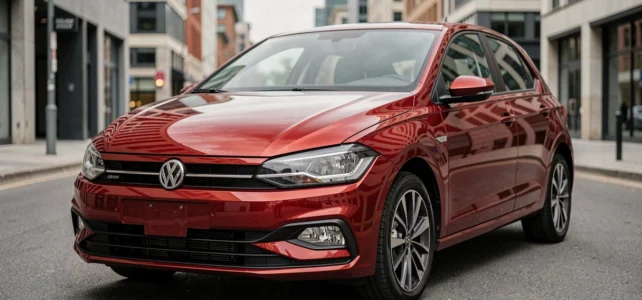
The Volkswagen Polo 6, produced since 2017 and restyled in 2021, offers a catalog of trims and colors that has evolved significantly over the years. Between the entry-level equipment and the sporty or high-end variants, the differences in features are sometimes more subtle than they appear. The pricing strategy for each trim deserves careful consideration, as some features considered standard on other city cars remain optional or reserved for higher levels.
Polo 6 Color Palette: What the Standard Colors Reveal About Positioning
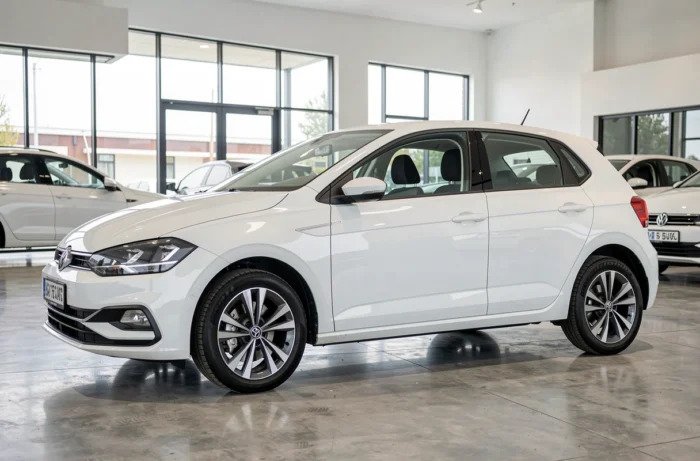
On the Polo VI, the color provided at no extra cost directly depends on the chosen trim. Entry-level models generally offer a solid white as standard, while metallic paints (Ascot Grey, Recife Blue, Deep Black, among others) are charged as options. This setup is not insignificant: the standard color steers the sales mix towards subdued shades, and available data on the used car market confirms an overrepresentation of greys and whites.
Higher trims like R-Line or GTI sometimes include a specific metallic color in their base price, which complicates direct comparisons with lower levels. In the used car market, certain bright colors (Flash Red, Energetic Orange) remain rare and can affect resale value.
To explore all the trims and colors of the Volkswagen Polo 6 with details of the associated equipment, the technical sheets by level provide a clearer view than general configurators.
Polo 6 Phase 1 and Phase 2 Trims: The Concrete Equipment Differences
The Polo VI phase 1 (2017-2021) and phase 2 (from 2021) do not share exactly the same trim nomenclature. Phase 1 notably offered the Trendline, Comfortline, Carat, Carat Exclusive, Copper Line, R-Line, and GTI levels. With the facelift, Volkswagen simplified the range around the names Life, Style, and R-Line, removing some intermediate variants.
This restructuring had a direct effect on standard equipment. The Life trim of phase 2 includes elements that previously required upgrading: LED lighting, touchscreen, smartphone connectivity. However, the integrated navigation remains absent from the base Life level and only appears from Life Plus or Style depending on the model year.
The Equipment That Makes the Difference Between Life and Style
The transition from Life to Style in phase 2 mainly brings:
- Larger diameter alloy wheels (upgrading from 15 to 16 or 17 inches depending on options)
- The Digital Cockpit, a digital instrument cluster that replaces analog gauges
- More comprehensive driving aids, including Front Assist with city emergency braking and Lane Assist
- An infotainment system with navigation and voice control
For a used car buyer, the Life Plus trim often offers the best equipment-to-price ratio, as it includes navigation without the additional cost associated with the wheels and aesthetic elements of the Style trim.
Engines by Trim: A More Constrained Choice Than It Seems
Not all engines are available across all trims, and this constraint often goes unnoticed in general buying guides. The 1.0 MPI engine with 80 hp, paired with a 5-speed manual transmission, is reserved for entry-level models. Its combined fuel consumption remains reasonable, but its limited power hampers acceleration and highway driving.
The 1.0 TSI in the 95 hp version constitutes the core of the range. Available with a 5-speed manual or DSG 7, it equips the majority of Life and Style trims. The DSG 7 version is only accessible from the Life trim, effectively excluding the base levels.
The 1.0 TSI 110 hp, which is more responsive, is generally offered starting from the Style or R-Line trim. The GTI, on the other hand, has its own 2.0 TSI engine that has no equivalent in the rest of the range. Feedback on the DSG 7’s behavior in the city varies (some users report jerks at low speeds), a point to check during a test drive.
R-Line and GTI: Polo 6 Sporty Trims, Two Distinct Logics
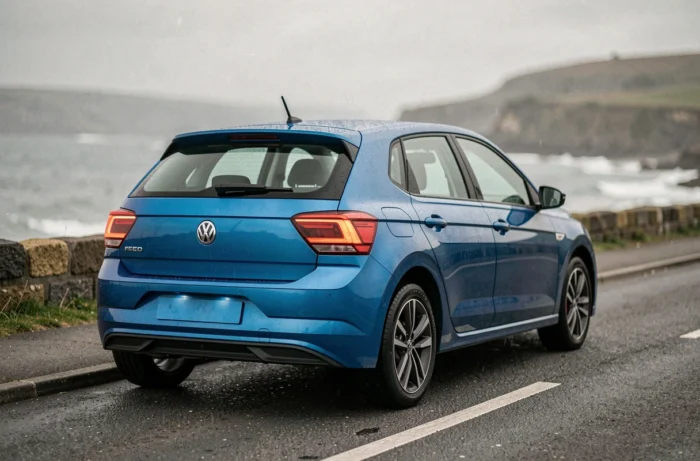
The confusion between R-Line and GTI frequently arises among buyers. The R-Line is primarily an aesthetic package: redesigned bumpers, specific wheels, sporty upholstery, and steering wheel. It is available on standard engines (1.0 TSI 95 or 110 hp) and does not alter the running gear or engine mapping.
The GTI, however, constitutes a true sporty version with a dedicated engine, a lowered chassis, reinforced brakes, and a limited-slip differential. Only the GTI truly alters the dynamic behavior of the Polo. The entry price of the GTI is significantly higher than that of an R-Line, and the depreciation on the used market remains lower due to strong demand.
Exclusive Colors and Distinctive Elements
The GTI offers dedicated shades absent from the rest of the range, such as Kings Red. The R-Line, on the other hand, allows access to bi-tone combinations (contrasting black roof) that are not always available on the Life or Style trims. These bi-tone options were expanded with the 2021 facelift, but their actual availability varies depending on stock and factory orders.
The choice of a Polo 6 trim depends less on marketing positioning than on three concrete criteria: the desired engine, the presence or absence of integrated navigation, and the type of wheels. By cross-referencing these elements with the available colors by level, the reading grid becomes clearer than what a catalog that has featured up to seven simultaneous trims might suggest.