The free time of the French is increasing, and with it the search for leisure activities that go beyond mere occupation. According to an OpinionWay study for Intersport (July 2026), 79% of the French already engage in outdoor sports, and 55% wish to intensify this practice in the coming years. The dominant motivation is no longer performance, but well-being and reconnection with nature. This shift is reshaping the landscape of trending leisure activities.
Creative hobbies and DIY: the trend gaining ground against screens
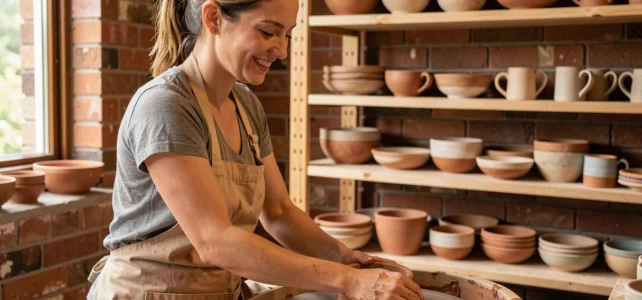
34% of the French engage in a creative or manual activity, according to an OpinionWay study for Wecandoo reported by VSD in August 2026. Ceramics, woodworking, sewing, bookbinding: these practices are experiencing a notable increase in their revenue.
What makes this phenomenon interesting is its motivation. DIY is not just about making an object. It meets a need for concrete disconnection, with hands replacing the screen, and the result is tangible. A two-hour pottery workshop produces a bowl usable the next day. The gratification is immediate, physical, and requires no subscription.
Collective in-person workshops (ceramics, woodworking, leatherwork) combine this manual dimension with a social aspect. They attract a variety of profiles, often adults aged 25 to 45, who are looking for a regular activity outside of sports. To explore other avenues for leisure time, leisure activities on Playboy Store cover a wide range from board games to outdoor accessories.
Outdoor activities focused on well-being: what the trend really changes
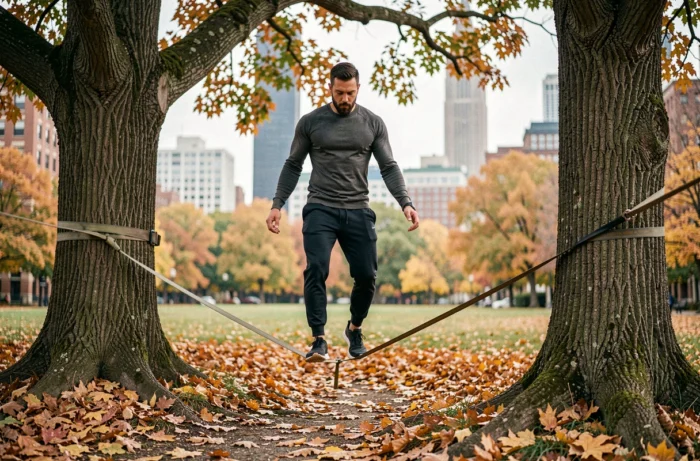
Hiking, cycling, and running dominate outdoor practices. Nothing new at first glance. What has changed is the why. The OpinionWay/Intersport study shows that the search for well-being has replaced the quest for performance as the primary driver of outdoor activities.
This means that flexible formats are gaining over structured ones. A 45-minute walk in the forest, without a timer or distance goal, is more appealing than a half-marathon training plan. Cycling is becoming a leisurely activity again rather than a data-driven sport.
Three outdoor formats on the rise
- Contemplative walking or “forest bathing,” practiced without special equipment, focusing on sensory immersion rather than distance covered
- Canoeing and kayaking on rivers, activities accessible in pairs or families, combining moderate physical effort and direct contact with a natural environment
- Guided nature outings (ornithology, botany, mushroom identification), which add a learning dimension to simple walks
The common point: these activities are low-pressure, can be done alone or with others, and do not require annual registration or a federal license.
Board games and themed evenings: the return of leisure in small groups
Modern board games have little in common with Sunday afternoon Monopoly. Cooperative games, mystery games (murder parties), and home escape games transform an evening with friends into an immersive experience without leaving the living room.
This format is appealing because it meets two simultaneous constraints: a limited budget and the need for conviviality. A mystery game box costs about the same as a movie ticket and occupies a group of four to six people for two to three hours.
Themed evenings: structuring leisure time differently
Tasting evenings (wine, cheese, tea) operate on the same principle. They transform an ordinary moment into a full-fledged activity, with a guiding theme and integrated learning. Home leisure becomes an experience when it is scripted.
Home karaoke evenings are also experiencing a resurgence of interest. The basic equipment (microphone and app on television) remains accessible, and the activity works well both as a couple and in groups.
Useful digital leisure: when screen time becomes productive
Not all screen leisure activities are created equal. One category is clearly emerging: digital activities that produce a transferable skill. Learning video editing, taking a digital drawing course, or getting started in photography with a structured tutorial: leisure becomes informal training.
Online course platforms offer short modules (one to two hours) on specific topics. The difference from passive scrolling on social media comes down to one word: intention. Actively choosing to learn something during leisure time changes the perception of an evening spent in front of a screen.
Podcasts and audio creation
Listening to podcasts remains one of the most consistently growing leisure activities in France. Amateur podcast creation is also starting to democratize. Recording a thematic episode with a friend requires minimal material investment and offers a creative leisure activity that combines writing, technique, and exchange.
How to choose a lasting leisure activity
The main pitfall of trending leisure activities is abandonment after a few weeks. Choosing a sustainable activity relies on three concrete criteria:
- The real logistical constraint: an activity that requires 40 minutes of transport will be abandoned faster than one that can be done at home or nearby
- The recurring cost: favor leisure activities with a one-time initial investment (drawing materials, board games, hiking equipment) rather than monthly subscriptions that become fixed expenses
- The social dimension: activities practiced with others (workshops, games, nature outings in groups) generate commitment through regular meetings, whereas a solitary activity relies solely on personal discipline
The best leisure activity is not the most original or the most photographed on social media. An activity that can be done nearby, without a subscription, and shared with others is much more likely to last.