
In France, the nursing profession is the largest category of healthcare professionals by number. Their scope of action covers technical care, prevention, support for chronic patients, and, recently, an expanded clinical autonomy granted by law. Understanding what the nursing role concretely entails allows us to measure how much the daily functioning of the healthcare system relies on these professionals.
Law of June 27, 2025: what the nursing reform changes
Law No. 2025-581 of June 27, 2025 marks a legal turning point for the profession. It formally recognizes nurses’ ability to assess a patient’s health status within their scope of competence, develop a care plan, and direct the person to the appropriate professional.
Before this text, this autonomy existed in practice but without a clear legal framework. The law thus formalizes an already common practice while paving the way for new prerogatives.
Since June 30, 2026, the implementing orders allow nurses to conduct autonomous consultations in several specific areas. Professional unions and regulatory bodies document these developments on their respective platforms, such as https://convergenceinfirmiere.fr/, which follows the profession’s news through the reforms.
Nurse prescription in 2026: areas and concrete limits
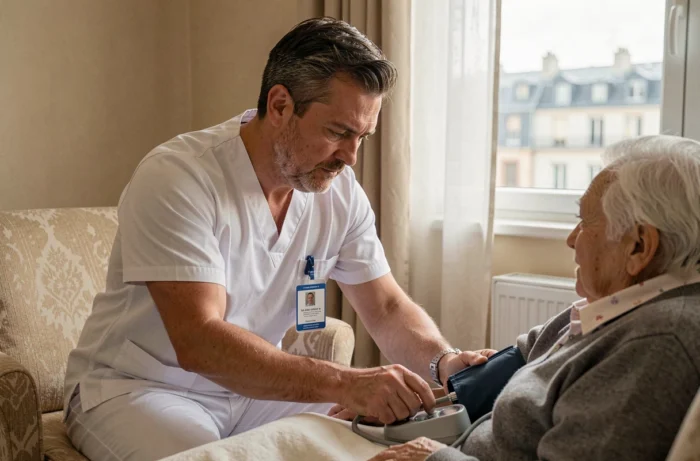
The orders of June 26, 2026, define the acts that nurses can now prescribe or renew without going through a doctor. This scope remains targeted, but it addresses frequent care situations.
- The management of wounds, including the prescription of dressings and suitable devices, is now within the direct nursing competence.
- Vaccination and sexual health are part of the consultations where the nurse prescribes certain health products and directs the patient.
- Smoking cessation and requests for certain biological tests complete this new prescription scope.
This list may seem modest. However, it represents a considerable volume of consultations that, until now, required a visit to the primary care physician, sometimes solely to obtain a renewal prescription.
Each autonomous consultation avoids a medical appointment in a context where millions of French people do not have a primary care physician. The gain is not symbolic: it is organizational.
Direct access to nursing care: an experiment still blocked
The law provides for a three-year experiment in five departments to allow patients to consult a nurse directly, including for acts that do not fall under the nurse’s own role. Direct access means that no prior medical prescription is required.
The initial schedule announced the publication of the decree setting the concerned departments and evaluation modalities for March 2026. However, as of September 2026, this decree had still not been published, as noted in several written questions submitted to the Senate on September 17 and 24, 2026.
This delay illustrates a recurring pattern: the law expands competencies, but the implementing decrees are delayed. Nurses then find themselves in a gray area, legally authorized to undertake new missions but without an operational framework to do so.

Nursing education and competency framework: the overhaul of 2026
The expansion of missions requires appropriate training. The nursing education framework is undergoing a revamp to integrate digital health, autonomous consultation, and advanced clinical reasoning.
The French model is based on a competency-based framework rather than solely on the acquisition of theoretical knowledge. Each competency is assessed in clinical situations, during hospital internships, and in community care.
The reform of the diploma includes strengthening teachings related to prescription, clinical assessment, and coordination of care pathways.
Salary recognition and working conditions: the persistent gap
The study conducted by the National Order of Nurses with the ELABE firm shows that the vast majority of French people support an expansion of nursing competencies to improve access to care. This public support does not automatically translate into salary increases or improvements in working conditions.
Workload, staff shortages in certain departments, and the feeling of a lack of recognition remain the main irritants reported by professionals.
The paradox is tangible: legislative texts expand the scope of practice, but funding and organizational mechanisms do not keep pace. Clinical autonomy progresses faster than institutional recognition. As long as this gap persists, the reform risks remaining partially theoretical for some practicing nurses.